
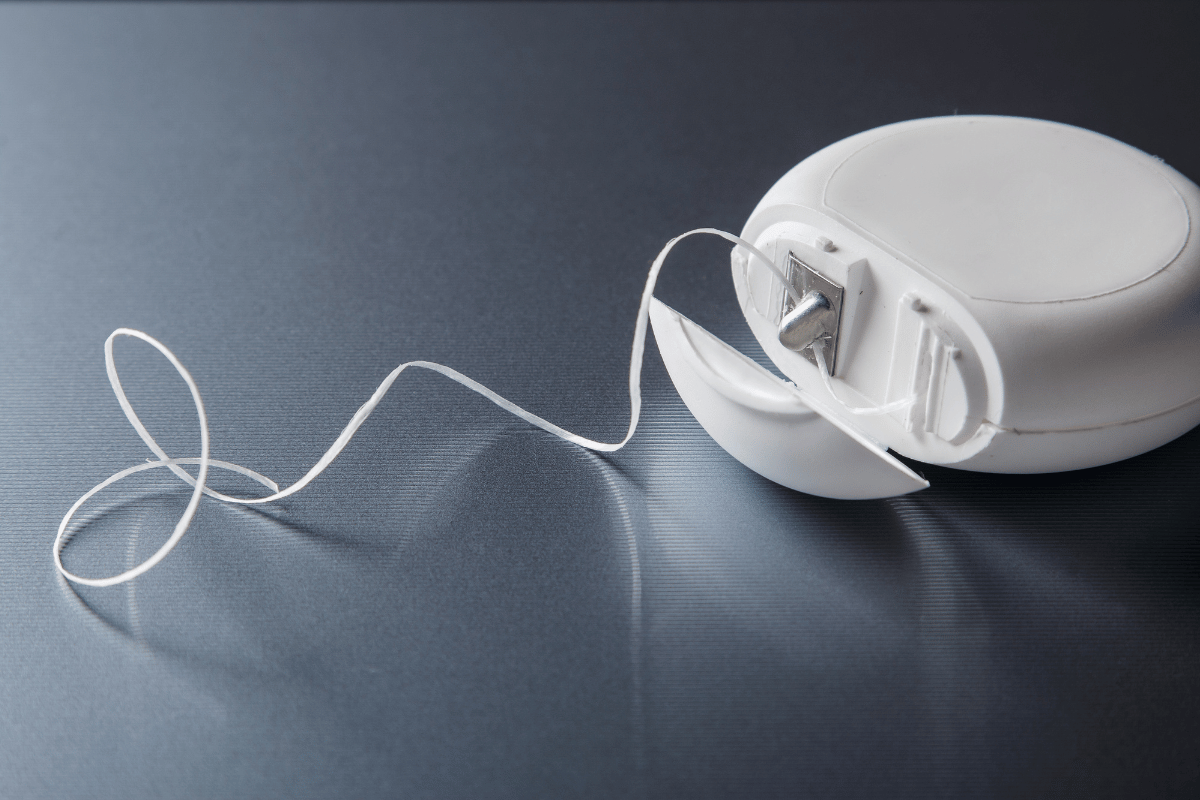
You’ve probably never thought too much about what's in traditional dental floss. It’s a bathroom staple, and your dentist always recommends it. But let’s take a closer look at what's really in traditional floss—and explore some eco-friendly alternatives.
Traditional Big-Name Dental Floss

Most traditional floss is made from nylon or Teflon (polytetrafluoroethylene, or PTFE). Nylon floss is made of multiple strands twisted together, making it strong but prone to shredding. PTFE floss, on the other hand, is a single filament that glides more easily and resists shredding. But both are synthetic polymers—essentially plastic. When they shred, they release microplastics into your mouth. Scary, right? Microplastics have been found throughout the human body, even in breast milk and testicles.
If the floss contains or is coated with Teflon, the news gets worse. Teflon is a polyfluoroalkyl substance (PFAS), also called "forever chemicals." These can disrupt hormones, weaken the immune system, increase cancer risk, and cause developmental issues. A study from the Public Health Institute in Berkeley, CA, even linked certain floss brands to higher levels of PFAS in the blood.
And what about the coatings? Many traditional flosses use paraffin wax or synthetic waxes (petroleum-based) and include artificial flavorings and additives, which may pose health risks over time.
Aside from personal health, traditional floss harms the environment. Because it's plastic-based, it doesn’t break down in nature and may end up being ingested by wildlife. Switching to more natural, eco-friendly alternatives is definitely worth considering.
Bamboo Dental Floss

It’s a common misconception that all bamboo products are sustainable. Unfortunately, bamboo floss often isn't. Bamboo fibers are short, so they're typically blended with nylon or polyester—plastic, in other words. Despite being labeled "biodegradable" or "compostable," many bamboo flosses aren't.
So, while bamboo floss is vegan and often coated with natural wax and flavorings, it’s still plastic-based, which isn’t great for your health or the environment. Bamboo floss tends to be thicker, so it's better for people with larger gaps between teeth but not ideal for tightly spaced teeth.
Vegan PLA Floss

PLA (polylactic acid) is a bio-plastic usually made from renewable resources like corn, sugarcane, or canola oil. PLA floss has a smaller environmental impact than traditional plastic floss, as it's not derived from fossil fuels. However, while it’s designed to be commercially composted, it won’t break down easily in the natural environment, making it problematic if littered.
Most vegan flosses are coated with natural waxes and essential oils, making them a more natural choice. If your vegan values don’t align with silk floss, this could be a good option. That said, PLA floss is usually thin and can be a bit harsh on the gums, so it’s not ideal for sensitive gums. Its thinner consistency makes it a good option for people with tightly spaced teeth.
Silk Dental Floss

The most eco-friendly option is silk dental floss, made from 100% silk, meaning it’s entirely compostable. Our MABLE Zero-Waste Floss is crafted from Ashima silk (peace silk) and coated with plant-based candelilla wax, making it glide smoothly between teeth. It’s also infused with peppermint essential oil for a fresh experience. After flossing, just toss it in the compost, and it’ll break down naturally.
Most silk flosses come in refillable containers, making them zero-waste and reusable. Silk floss has a medium thickness and works well for people with average teeth spacing. It may not be ideal for tightly spaced teeth but is worth trying if you’re looking for the most eco-friendly option.

The Bottom Line: Make the Switch
Using traditional dental floss—especially those made with PTFE (Teflon)—not only exposes you to microplastics and harmful PFAS chemicals linked to serious health risks, but it also contributes to long-lasting environmental damage. Plastic floss never breaks down, and as it lingers in landfills and oceans, it harms wildlife and ecosystems. By switching to natural, eco-friendly alternatives like silk floss, you’re making a healthier choice for yourself and taking a crucial step toward protecting the planet. It’s time to ditch plastic floss for good—for your health and the Earth’s future.
Share:
Do Electric Toothbrushes Work Better With Braces?
Sustainable Smiles The Benefits of Switching to a Natural Toothbrush