

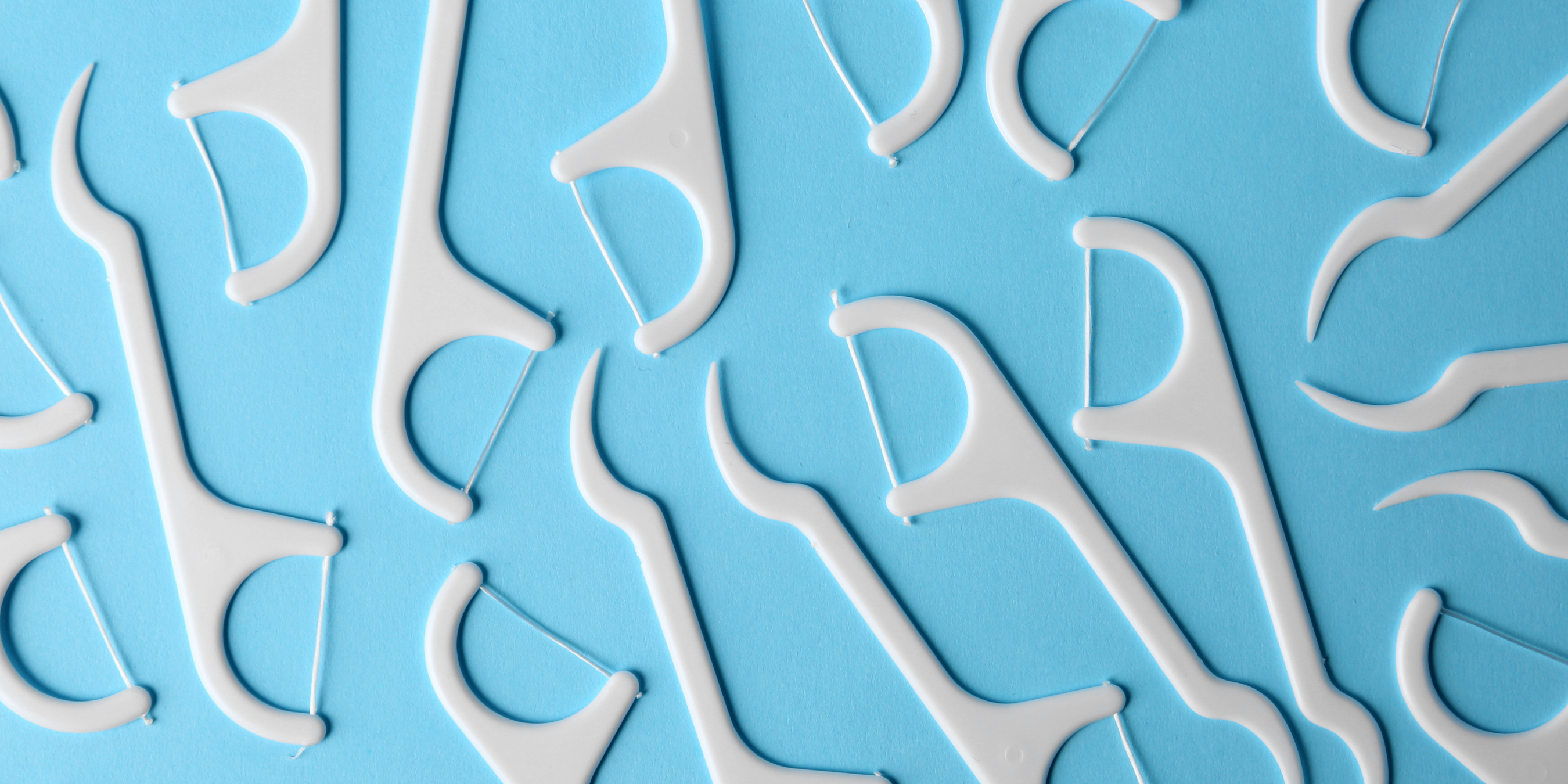
Floss picks are everywhere.
They’re quick, easy to use, and especially popular with kids. For many people, they feel like the simplest way to build a flossing habit without the mess or effort of traditional floss.
But there’s one problem.

Whether they’re made from plastic, bamboo, or labelled as “eco-friendly,” most floss picks are still designed to be used once and thrown away.
That means a small daily habit can quietly turn into a lot of unnecessary waste over time.
So, if you’re trying to make your oral care routine cleaner, lower-waste, and more honest, it may be time to look beyond floss picks and consider a better option: plastic free floss from MABLE Brush.
Are Floss Picks Bad?
Floss picks are not bad because they help people clean between their teeth. In fact, if they help someone floss more often, that’s a good thing.
The issue is not the flossing itself.
The issue is the waste.
Most floss picks are single-use by design. You use one, throw it away, and repeat the same thing tomorrow. Over weeks, months, and years, that adds up quickly.
They are also difficult to dispose of properly because they usually combine different materials. A plastic handle, synthetic floss, wax coating, and sometimes packaging all come together in one small product that is not easy to recycle or compost.
So, are floss picks bad?
Not always. But from a waste point of view, they are far from ideal.
Are Floss Picks Reusable or Refillable?
Most floss picks are not reusable.
Once the floss has been used, it can loosen, stretch, or collect bacteria. Reusing the same pick is not hygienic, and the product is not made to last.

Standard floss picks are also not refillable. The floss is fixed into the handle, which means once the floss is used, the whole product has to go.
That’s the key difference between floss picks and a refillable floss system.
One is built for convenience and disposal.
The other is built to be used again and again.
That is where the MABLE Brush Refillable Floss Container and Silk Floss Refill offer a better, lower-waste option.
The Problem with Traditional Plastic Floss Picks
Traditional floss picks are usually made almost entirely from plastic.
They are lightweight, cheap, and convenient, but they are also designed for one-time use. After a few seconds of flossing, the entire pick usually ends up in the bin.
They also cannot usually be recycled because they are too small, contaminated after use, and made with mixed materials.
This is why plastic floss picks are such a common waste problem. They feel tiny and harmless, but when used daily by millions of people, the impact becomes much bigger.
What About “Eco” Floss Picks?
This is where things get a little more confusing.
Many brands now sell floss picks made from PLA, cornstarch, bamboo, or other “eco” materials. On the surface, they sound better than plastic.

And sometimes, part of the product is better.
But that does not always mean the whole product is sustainable.
PLA Floss Picks
PLA is a plant-based bioplastic, often made from corn or sugarcane. It is commonly marketed as compostable or biodegradable.
The problem is that PLA usually needs industrial composting conditions to break down properly. Most people do not have access to those facilities.
Also, even if the handle is PLA, the floss itself is often synthetic, such as nylon or polyester.
And if one part of the product is not compostable, the whole product is not truly compostable.
Bamboo Floss Picks
Bamboo floss picks sound like a great idea.
Bamboo is natural, fast-growing, and looks more sustainable than plastic. But again, the handle is only one part of the product.
The floss is often still synthetic. Some brands use silk floss, but silk can break or snap easily if the product is not designed well.
And even with a bamboo handle, the pick is still usually single-use.
So while bamboo floss picks may seem more natural, they are not always the best long-term solution.
The Greenwashing Problem
Floss picks are a good example of an “almost sustainable” product.
They may improve one part of the design, such as replacing a plastic handle with bamboo or PLA, but they often ignore the full product lifecycle.
A better material does not always mean a better outcome.
If the product is still single-use, hard to compost, difficult to recycle, and made with mixed materials, it may not be as eco-friendly as it looks.
That is why it is important to look beyond the label.
Words like biodegradable, compostable, plant-based, and eco-friendly can sound reassuring, but they do not always tell the full story.
At MABLE Brush, we believe sustainable dental floss should be practical, honest, and genuinely lower-waste not just better-looking on the shelf.
Why MABLE Brush Doesn’t Make Bamboo Floss Picks
At MABLE Brush, transparency matters.
Bamboo floss picks sound like a product we should make. They fit the “eco” category. They look good on paper. They would probably be easy to market.
But when we tested bamboo and silk floss pick prototypes, they did not meet our standards.

The floss snapped too easily.
The tension did not hold well.
The user experience was not reliable enough.
And we do not want to release a product just because it sounds sustainable.
If it does not work properly, people will stop using it, throw it away, or go back to plastic picks. That does not solve the problem.
We are also exploring reusable floss pick options, but so far, the ones we have tested have felt too bulky and not practical enough for everyday use.
So instead of creating a product that looks good but performs poorly, we focus on what works better: refillable, plastic free dental floss.
The Better Alternative: MABLE Brush Plastic Free Floss
If you want a lower-waste option that still works well, a refillable dental floss system is one of the simplest swaps you can make.

Instead of throwing away a full plastic pick every time you floss, you use a Refillable Floss Container and replace only the floss when needed with a Silk Floss Refill.
What about Kids and Floss Picks?
Floss picks are popular with kids for a reason.
They are easier to hold, less fiddly, and can help children get used to flossing. For parents, that convenience can be helpful.
But habits can change over time.
If floss picks help a child start flossing, that may be a useful first step. As they grow, parents can gradually introduce better systems, such as refillable floss or reusable floss holders.
The goal is not perfection from day one.
The goal is progress.
Start with what helps build the habit, then move toward lower-waste choices when the routine becomes easier.
Quick Comparison: Floss Picks vs MABLE Brush Plastic Free Floss
| Type | Reusable | Compostable | Plastic-Free | Waste Level |
|---|---|---|---|---|
| Plastic Floss Picks | No | No | No | High |
| PLA Floss Picks | No | Rarely | No | High |
| Bamboo Floss Picks | No | Partial | Partial | High |
| MABLE Brush Refillable Dental Floss | Yes, as a system | Yes | Yes | Low |
Flossing should be easy.
But it does not need to create unnecessary waste every single day.
Floss picks may be convenient, but most are still single-use products, even when they are labelled as bamboo, PLA, compostable, or eco-friendly.
A refillable plastic free floss system from MABLE Brush is a better long-term choice. With a Refillable Floss Container and Silk Floss Refill, you can reduce plastic, cut down on daily waste, and still support a healthy flossing routine.
Small swaps matter.
And this is one of the easiest ones to make.
—----------------------
FAQ
Are floss picks reusable?
No. Most floss picks are designed for single use and should not be reused for hygiene reasons.
Are floss picks refillable?
No. Standard floss picks cannot be refilled because the floss is fixed into the handle.
Are bamboo floss picks compostable?
Not fully. The handle may be bamboo, but the floss is often synthetic, which prevents the full product from being properly composted.
Are PLA floss picks biodegradable?
PLA may break down in industrial composting facilities, but those facilities are not widely available. In normal landfill conditions, PLA may not break down as expected.
What is the most eco-friendly floss option?
A refillable, plastic free dental floss system is one of the lowest-waste options because it avoids single-use plastic and reduces packaging waste over time.
Are floss picks better for kids?
They can be easier for kids to use, especially when they are learning. But as habits develop, parents can introduce lower-waste options like refillable floss.

Share:
Why Doesn’t My Electric Toothbrush Head Fit?
Looking for Eco-Friendly Oral-B Replacement Heads?