

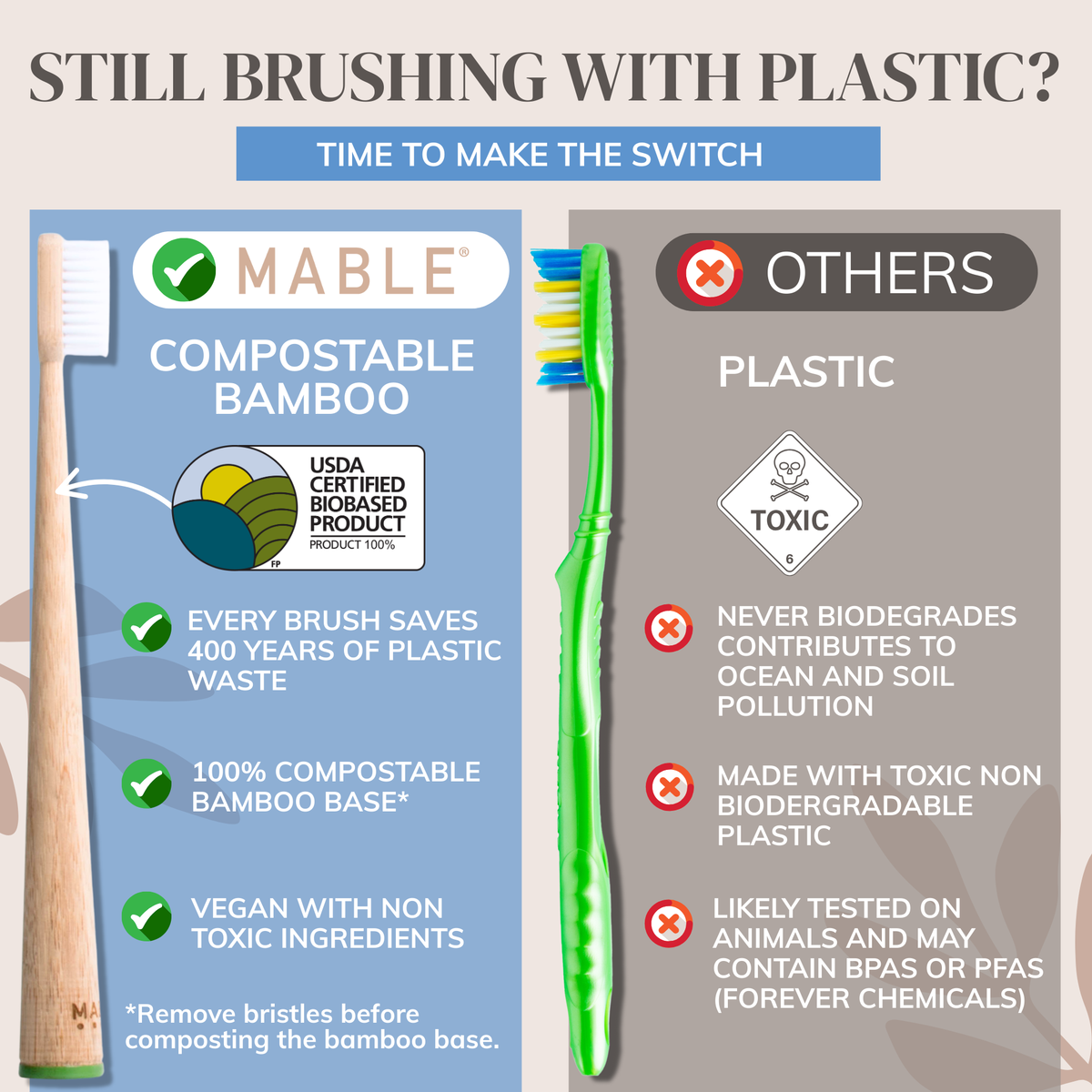
To compost a bamboo toothbrush, pull the bristles out with pliers (or snap off the head), throw the bristles in the trash, and put the bamboo handle in your compost. The handle usually breaks down in about 4 to 6 months, depending on your compost.
Here's the full process, plus a few uses for old brushes before they go in the bin.
Step 1. Remove the bristles
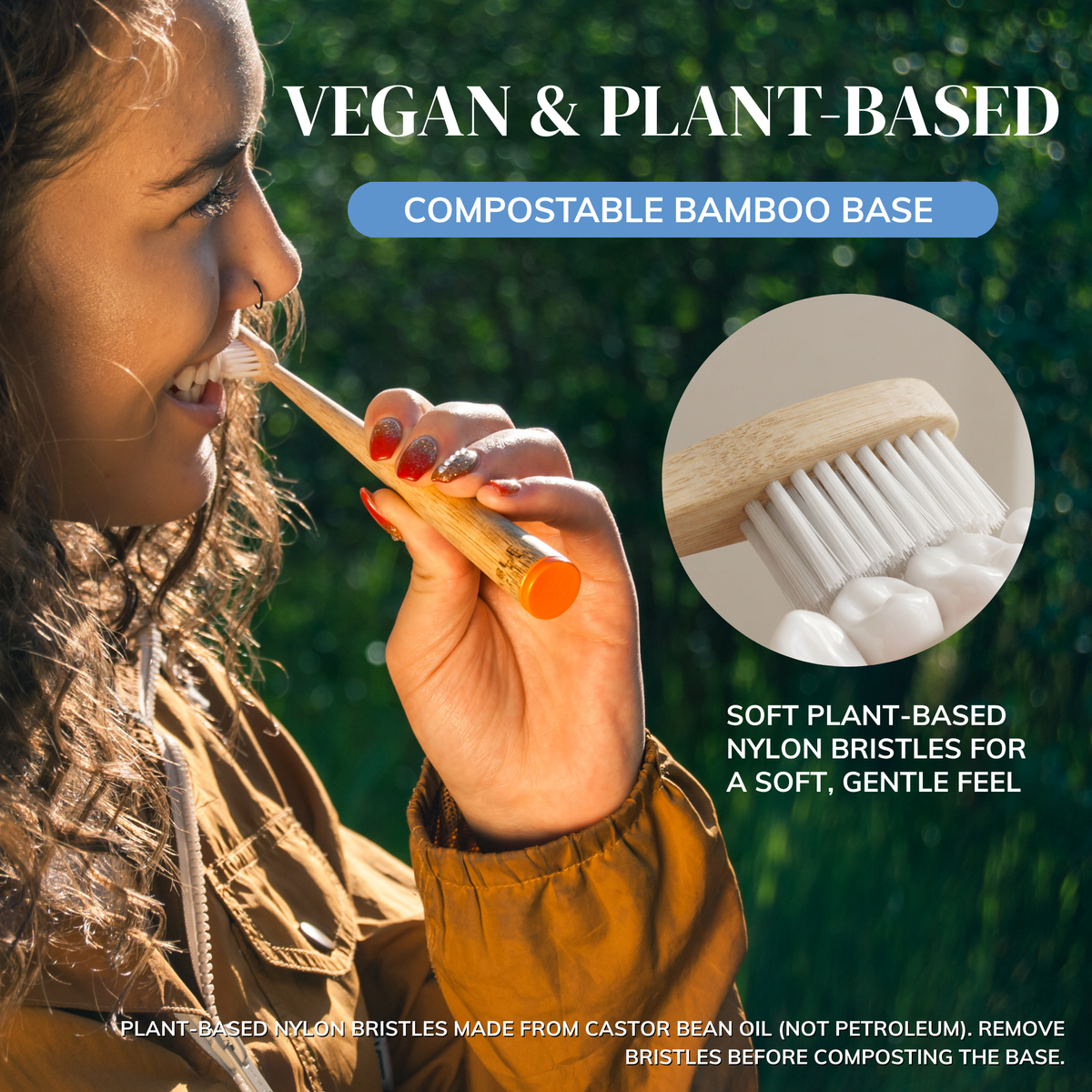
The bristles aren't compostable. Ours are made from nylon or a plant-based nylon derived from castor bean oil, which cuts fossil fuel use but still won't break down in compost. Grip a small tuft with pliers and pull. It takes a minute or two per brush. If that feels like too much, snap or cut off the bristle head and put just the head in the trash.

Step 2. Compost the handle
Put the bamboo handle in a backyard compost bin or your city's green bin, if it accepts wood. Breaking it into a few pieces helps it go faster. In an active, warm pile, expect about 4 to 6 months. In a cool, dry pile it can take longer.
Our MABLE bamboo toothbrush handles are USDA BioPreferred certified as 100% biobased, with no plastic coating to get in the way.
No compost? Other options
If you don't have a compost bin, the bamboo handle can go in a yard-waste bin in many cities. Check your local rules. In the trash, it still beats plastic, which can last hundreds of years.
And there's one more option. Give it a second job first.
Give old brushes a second life
- Scrub grout, faucets and the edges around the sink.
- Clean bike chains, shoe soles or jewelry.
- Use the handle as a plant marker in the garden.
When it's done with its second job, pull the bristles and compost it.
How long does a bamboo toothbrush take to decompose?
In a warm, active compost pile, the bamboo handle usually breaks down in about 4 to 6 months. Three things speed it up. Break the handle into smaller pieces, keep the pile moist but not soggy, and turn it now and then. In a cold or dry pile, or a landfill with no air, it can take much longer.
How to recycle a bamboo toothbrush
Bamboo handles aren't accepted in curbside recycling, because they're wood, not plastic, paper or metal. Composting is the right route for the handle. The paper box it came in can go in your recycling bin.
Electric brush heads too
The same steps work for our bamboo electric heads, like the Sonicare-compatible and Oral-B-compatible heads. Remove the bristles, then compost the bamboo body.
How much difference it makes
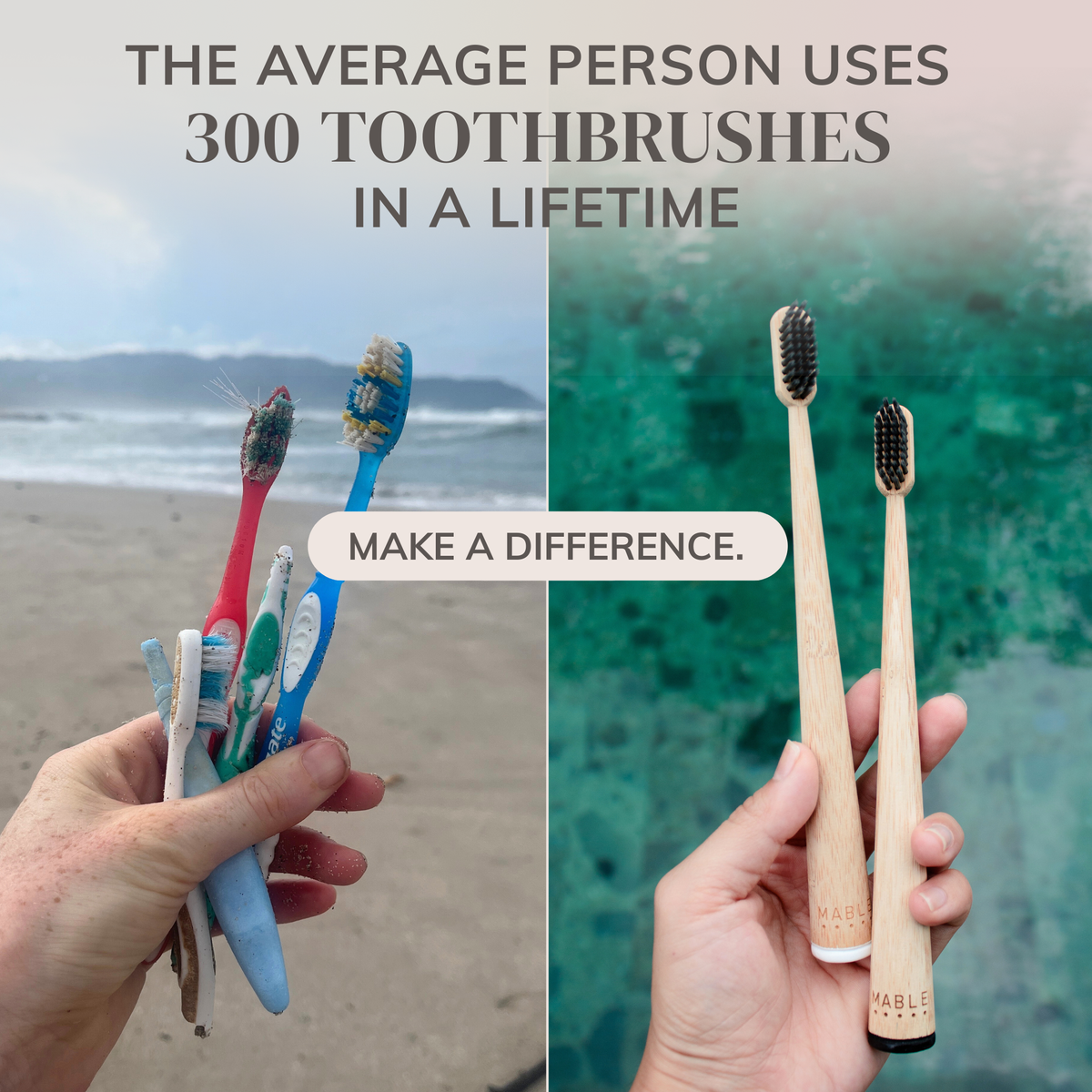
The American Dental Association recommends a new toothbrush every three to four months, so a family of four goes through 12 to 16 brushes a year. Swapping those to bamboo keeps a lot of plastic out of the trash. See your own number with our plastic calculator.
Quick answers
Can I compost the whole toothbrush?
No. The bristles have to come out first, because nylon doesn't compost. The bamboo handle can go in compost.
Can the bamboo go in my city's green bin?
Many cities accept untreated wood in yard waste, but not all of them. Check your local rules.
Is the packaging compostable?
Our boxes are unbleached cardboard printed with soy-based inks. Recycle them, or compost them in a home pile.
How often should I replace my brush?
Every three to four months, or sooner if the bristles fray or after you've been sick.
Does it matter if the handle has mold?
Compost it anyway, after removing the bristles. To prevent mold, let the brush dry upright between uses.
Share:
What order should you brush, floss, and use mouthwash? Does it matter?
Are Generic Sonicare Brush Heads Good? Are They Safe?