
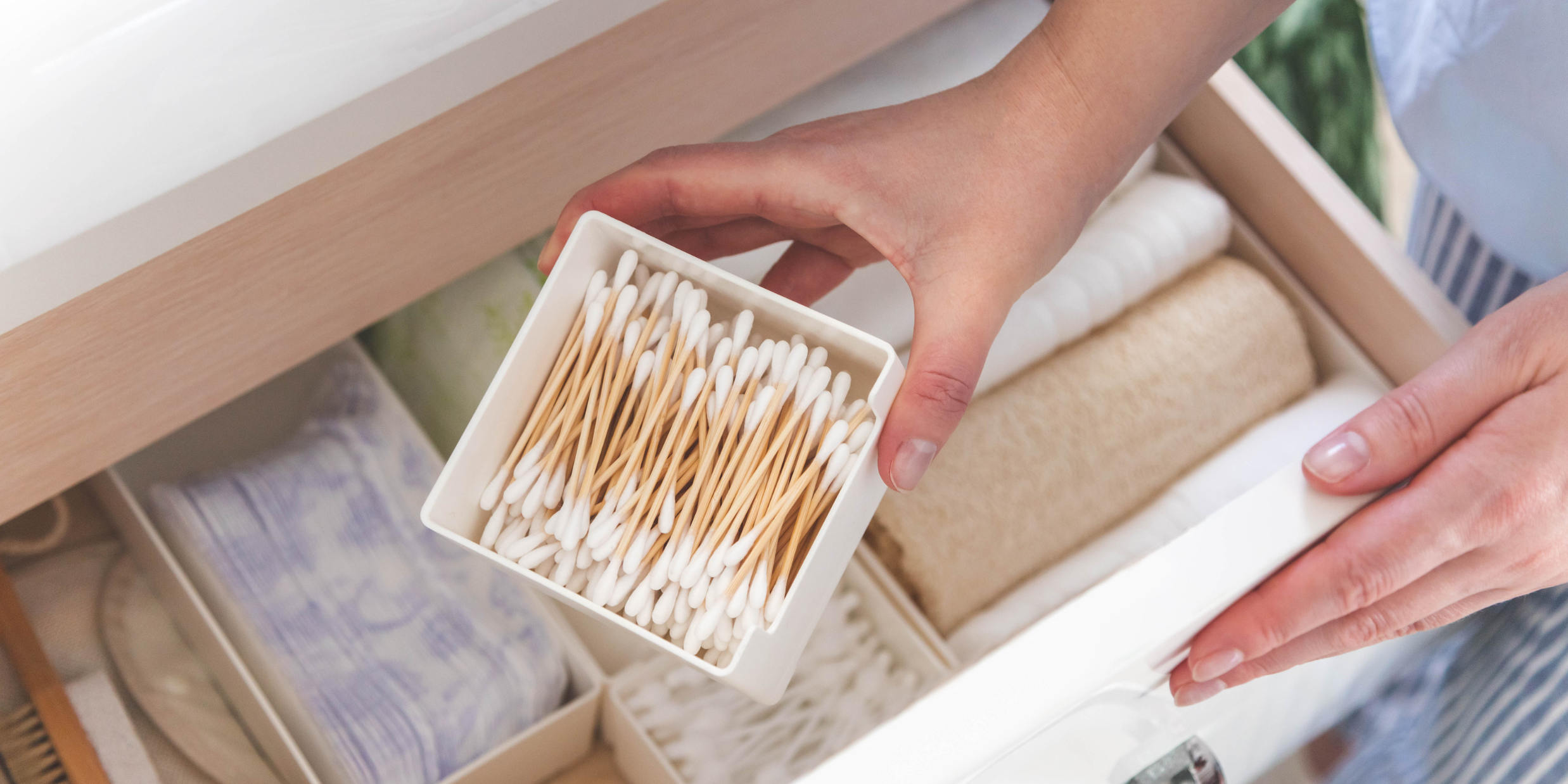
Trying to create a more sustainable bathroom does not mean emptying every drawer, throwing away your plastic products, and replacing them with a perfectly matching collection of new sustainable bathroom products.
In fact, the most sustainable bathroom product may be the one already sitting in your drawer as long as it is safe, usable, and not expired.

Already have a plastic toothbrush, a container of floss picks, half a bottle of mouthwash, or a box of cotton swabs? Using those products before replacing them can prevent unnecessary waste and help you make more thoughtful choices later.
That is the idea behind the “Use It Up First” challenge:
-
Take inventory of what you already own.
-
Continue using products that are safe and useful.
-
Stop buying items you do not genuinely need.
-
Choose lower-waste replacements only when it is time.
The goal is not to create a perfect bathroom shelf overnight. The goal is to build a realistic, low-waste bathroom routine that lasts.
Why Is Using What You Already Own More Sustainable?
Buying eco-friendly bathroom products can be a positive step, but every new product still requires materials, packaging, manufacturing, and transportation.
Throwing away a usable product simply because a more sustainable alternative is available creates immediate waste. It also means the resources used to make the original product are wasted before the product has completed its useful life.
Sustainable bathroom swaps tend to make the most sense when they replace something you already needed to buy.
For example, switching to a bamboo toothbrush can reduce your reliance on plastic toothbrush handles. However, throwing away a perfectly usable toothbrush just to make the switch sooner does not necessarily reduce waste.
A slower transition gives you time to:
-
Understand which products you actually use
-
Avoid buying unnecessary replacements
-
Research lower-waste alternatives
-
Spread the cost of sustainable swaps
-
Create habits you can realistically maintain
You also do not have to force yourself to finish a product you dislike. When something is still safe and hygienic but no longer works for you, consider whether a family member or friend could use it instead.
Sustainable living should not be based on guilt. It should help you make better decisions with the products and resources available to you.
How the “Use It Up First” Challenge Works
You can complete the first stage of this challenge in around 15 to 20 minutes.
Step 1: Take everything out
Pull out the products stored in your bathroom cabinets, drawers, travel bags, and cupboards.
You may find several partially used products, unopened backups, travel-size toiletries, old toothbrush travel cases, or items you forgot you owned.
Step 2: Sort everything into four groups
Create four simple categories:
Use now
These are opened products that are safe, useful, and should be finished before opening something new.
Use later
These are unopened backups or products you will realistically use once your current item runs out.
Replace when empty
These are products you plan to replace with a lower-waste alternative, such as plastic-free floss, bamboo cotton swabs, or a bamboo toothbrush.
Let go responsibly
These are products that are expired, damaged, contaminated, irritating, or no longer safe to use.
Step 3: Make products visible
Move your “use now” products to the front of your drawer, cabinet, or bathroom shelf.
Products are much more likely to get used when you can see them.
Step 4: Create a replacement list
Instead of immediately shopping for sustainable bathroom products, write down what you would like to buy when each current product runs out.
This creates a plan without creating more clutter.
Which Bathroom Products Should You Use Up First?
Start with products that are already open, still safe, and easy to include in your normal routine.
These may include:
-
Toothpaste
-
Floss or floss picks
-
Cotton swabs
-
Mouthwash
-
Soap
-
Shampoo and conditioner
-
Skincare products
-
Travel-size toiletries
-
Backup bathroom products
-
Toothbrushes or brush heads that remain in good condition
Try to finish one product in a category before opening another.

For example, use the half-empty shampoo before opening your backup bottle. Finish the current container of floss before buying silk dental floss. Use the cotton swabs you already own before replacing them with bamboo cotton swabs.
However, reducing waste should never come at the expense of your health, comfort, or hygiene.
Do not continue using a product merely to avoid throwing it away when it:
-
Has expired
-
Smells unusual
-
Has changed colour or texture
-
Appears contaminated
-
Causes discomfort or irritation
-
Contains ingredients you have decided to avoid
-
No longer feels safe to use
The “use it up first” approach applies only to products that are still suitable for their intended purpose.
What Should You Replace Before It Is Completely Used Up?
Some bathroom products should be replaced when they stop working safely or hygienically, even when they are not technically “finished.”
Frayed toothbrushes
A toothbrush with bent, worn, or frayed bristles may no longer clean effectively. Sustainability is not a reason to keep using a toothbrush beyond its useful life.
The same principle applies to worn electric toothbrush heads.
Expired or contaminated products
Do not use expired toothpaste, skincare, cosmetics, or personal-care products simply to avoid waste.
Products that smell unusual, have separated unexpectedly, or may have been contaminated should also be discarded appropriately.
Products that cause irritation
Stop using any product that causes ongoing irritation, discomfort, or another unwanted reaction.
Damaged toothbrush travel cases
A toothbrush travel case can be reused for years when it remains clean and functional. However, it may be time to replace it when it is cracked, mouldy, difficult to clean, or no longer protects the toothbrush properly.
Products you will realistically never use
Sometimes an item is safe but simply does not fit your routine.
Rather than leaving it untouched for years, see whether somebody else can use it. When that is not possible, check whether the packaging or product can be disposed of through an appropriate recycling or waste programme.
Plan Sustainable Bathroom Swaps Before You Run Out
Once you know which products you regularly use, you can choose replacements more thoughtfully.
The following plastic-free bathroom swaps can be added to a “replace later” list rather than purchased immediately.
Switch to plastic-free floss when your current floss runs out
Dental floss is a small product, but conventional floss and its packaging can include plastic.
Finish any usable floss you already own. When it is time to restock, explore a refillable plastic-free floss system that suits your dental routine.
Silk dental floss may be a lower-waste option for people who are comfortable using an animal-derived product. It may feel slightly different from synthetic floss, so allow yourself time to adjust.
The MABLE refillable floss container is designed to be reused, while its silk floss refills can be purchased separately when the original spool runs out.
You can also read MABLE’s guide to plastic-free floss and alternatives to disposable floss picks before deciding whether the switch suits your routine.
The most important consideration is choosing an option you will use consistently.
Replace your toothbrush with a bamboo toothbrush when it is worn
Do not throw away a usable plastic toothbrush simply because you have decided to switch to bamboo.
Continue using it until the bristles become worn or frayed. At that point, a MABLE bamboo toothbrush can be a lower-waste replacement for a standard toothbrush with a plastic handle.
Different household sizes and routines may require different options, so you can also explore MABLE’s complete collection of manual bamboo toothbrushes.

When disposing of a bamboo toothbrush, check the product’s instructions carefully.
The bamboo handle may be compostable under suitable conditions, but toothbrush bristles usually need to be removed and placed in general waste. Do not assume that the entire toothbrush can go into a compost bin.
For more information, read MABLE’s guide to using and disposing of bamboo toothbrushes.
Choose bamboo cotton swabs after finishing your current box
Already have plastic-stem cotton swabs at home? Use them responsibly before buying another box.
When they run out, MABLE bamboo cotton swabs provide a plastic-free alternative made with bamboo handles and cotton tips.
Regardless of the material, cotton swabs should never be flushed down the toilet. Dispose of them according to the product instructions and your local waste guidance.
Cotton swabs should also be used carefully and should not be inserted into the ear canal.
Replace the head, not your entire electric toothbrush
Owning an electric toothbrush does not mean you need to throw away the complete device to create a more sustainable bathroom routine.
Keep the handle while it remains functional and replace only the brush head when necessary. This usually creates less waste than replacing the entire toothbrush.
When shopping for eco electric toothbrush heads, check that the replacement is compatible with your specific electric toothbrush handle.
MABLE offers bamboo replacement heads designed to be compatible with selected models, including:
-
Philips Sonicare
-
Philips One
-
Oral-B
-
AquaSonic
-
Gleem
-
Laifen
Compatibility matters because different electric toothbrush handles use different attachment systems.
“Compatible with” does not necessarily mean that the replacement is official, endorsed by the original manufacturer, or suitable for every electric toothbrush.
No electric toothbrush head should be described as universal unless that claim has been verified.
Not sure which option fits your existing handle? Use MABLE’s guide to choosing the right bamboo electric toothbrush head.
Keep your toothbrush travel case while it still works
A plastic toothbrush travel case does not need to be replaced simply because it is made from plastic.
When it remains clean, durable, and suitable for your toothbrush, continuing to use it is usually the lower-waste choice.
Replace it only when it:
-
Breaks or cracks
-
Becomes difficult to clean
-
Develops mould
-
Stops protecting the toothbrush
-
No longer fits your toothbrush or brush head
When a replacement is genuinely needed, consider a durable bamboo toothbrush travel case that can protect your brush while travelling, visiting the gym, or brushing away from home.
Make a “Replace Later” List, Not a Shopping Cart
One of the easiest ways to avoid overbuying is to keep a simple replacement list.
Your list might look like this:
-
When my floss runs out: try plastic-free floss or silk dental floss
-
When my toothbrush becomes worn: replace it with a bamboo toothbrush
-
When my cotton swabs are gone: choose bamboo cotton swabs
-
When my electric toothbrush head needs replacing: find a compatible eco electric toothbrush head
-
When my travel case breaks: choose a durable bamboo toothbrush travel case
-
When my soap runs out: consider a product with minimal packaging
-
When I finish similar products: replace them with one useful multiuse product
This approach gives you time to research one product at a time. It can also prevent you from feeling pressured to transform your entire bathroom immediately.
A replacement list is a plan. A shopping cart is a purchase.
You do not have to buy something simply because it has been marketed as sustainable.
Try the 30-Day “Use It Up First” Challenge
A 30-day challenge can help you understand your routine and reduce unnecessary purchases.
Week 1: Inventory your bathroom
Collect your bathroom products and sort them into the four categories:
-
Use now
-
Use later
-
Replace when empty
-
Let go responsibly
Make a note of any products you have in duplicate.
Week 2: Move half-used products forward
Place opened and half-used products somewhere visible.
Use the shampoo, toothpaste, floss, skincare, and toiletries you already have before opening backups.
Week 3: Finish one category before buying more
Choose one category—such as soap, floss, shampoo, or skincare—and avoid buying another product until the current one is finished.
This can help reveal whether you genuinely need several products serving the same purpose.
For example, you may not need a separate foot scrub, body scrub, and exfoliating tool. After using what you already own, you might decide that one versatile exfoliating product is enough.
Week 4: Replace only what has run out
At the end of the month, buy only what you genuinely need.
Where appropriate, choose a lower-waste replacement that fits the routine you already have.
You can also try one simple rule throughout the challenge:
Do not buy a new bathroom product unless you are completely out or it is a genuine hygiene need.
Sustainable Bathroom Swaps to Consider When the Time Is Right
You do not need every product on this list. Think of these as possibilities to consider when an existing item reaches the end of its useful life.
Plastic-free floss
Look for floss and packaging designed to reduce unnecessary plastic. A reusable container paired with replaceable floss spools can help reduce repeated packaging.
Silk dental floss
Silk dental floss can be an option for people who want to reduce synthetic materials and who are comfortable using silk. It is not suitable for vegans.
Bamboo toothbrushes
A bamboo toothbrush can replace a traditional plastic-handled toothbrush when your current brush becomes worn.
Remember to review the disposal instructions and remove the bristles when required.
Bamboo cotton swabs
After finishing the cotton swabs already in your bathroom, consider bamboo-stem alternatives. Never flush cotton swabs, including bamboo versions.
Eco electric toothbrush heads
Keep a working electric toothbrush handle and replace only the head when necessary. Confirm compatibility before purchasing a replacement head.

Refillable or reusable containers
Refillable containers may reduce repeated packaging, provided you will reuse them consistently and can access suitable refills.
Durable toothbrush travel cases
Keep your existing case while it is hygienic and functional. When it eventually needs replacing, prioritise durability, ventilation, and ease of cleaning.
Minimal-packaging products
When comparing similar products, consider whether one uses less unnecessary wrapping or packaging.
Multiuse products
A product that performs several useful functions may help reduce the number of separate products stored in your bathroom.
For more ideas, explore MABLE’s guide to creating a sustainable bathroom sanctuary.
The best option is not automatically the one with the most sustainable-looking packaging. It is the option that meets your needs, gets used regularly, and prevents unnecessary purchasing.
Sustainable Bathroom Swaps Should Fit Your Real Life
A sustainable bathroom does not have to be perfectly organised, completely plastic-free, or filled with brand-new eco-friendly bathroom products.
Start with what you already own.
Use products that remain safe and useful. Pay attention to what you genuinely need. Avoid opening duplicates. Replace items gradually as they run out or reach the end of their useful life.
When it is time to restock, you can explore lower-waste options such as:
MABLE offers these alternatives, but there is no need to replace your entire bathroom drawer at once.
Sustainable bathroom swaps work best when they support your real routine—not when they create more waste, expense, or pressure.
Frequently Asked Questions
Is it better to use old bathroom products before buying sustainable alternatives?
Yes, when the products are still safe, hygienic, useful, and not expired. Using what you already own can prevent immediate waste and reduce unnecessary purchasing. Replace products when they run out, become unsafe, or stop working properly.
What are the easiest plastic-free bathroom swaps?
Common swaps include plastic-free floss, a bamboo toothbrush, bamboo cotton swabs, minimal-packaging toiletries, and compatible eco electric toothbrush heads. Make each change when your current product needs replacing.
When should I replace my toothbrush with a bamboo toothbrush?
Replace your current toothbrush when its bristles become worn or frayed. There is no need to throw away a toothbrush that remains hygienic and effective simply to switch to bamboo sooner.
Is silk dental floss plastic-free?
Yes,MABLE’s silk dental floss is completely plastic-free and available in a reusable stainless steel dispenser, with separately available refill spools. Silk dental floss is not vegan.
Are bamboo cotton swabs better than plastic cotton swabs?
Yes, bamboo-stem cotton swabs can reduce the use of plastic stems. However, the lower-waste choice is to finish any safe cotton swabs you already own before buying a replacement.
Cotton swabs should never be flushed or inserted into the ear canal.
Can I make my electric toothbrush routine more eco-friendly?
Keep the electric toothbrush handle while it remains functional and replace only the worn brush head.
When purchasing eco electric toothbrush heads, confirm that they are compatible with your specific handle rather than assuming that every replacement head will fit.
Should I replace my plastic toothbrush travel case?
Not when it is still clean, functional, and durable. Continue using your existing travel case until it becomes broken, mouldy, difficult to clean, or unsuitable for your toothbrush.
When replacement becomes necessary, consider a durable and well-ventilated bamboo travel case.

Share:
Can You Run a Product Business While Traveling? How We Run MABLE Remotely