


Every year, millions of Americans clean out their closets, believing their old clothes will go directly to someone in need. But in today’s era of fast fashion where more garments are produced globally than can ever be reused, this assumption rarely reflects reality. The U.S., one of the world’s largest consumers of clothing, sits at the center of a growing sustainability crisis marked by overproduction, overconsumption, and overwhelming textile waste.

While donating feels responsible, only a small fraction of clothing is actually reused locally. Most items follow a far more complex journey, moving from thrift stores to export markets, downcycling facilities, or, ultimately, landfills. Understanding this hidden lifecycle is essential for anyone seeking to make genuinely sustainable choices about their old clothes.
So… where do old clothes really go? Most of us assume that when we donate clothing, it goes directly to people in need or is reused within their local community. But the truth is far more complicated. Only a small portion of donated items ever reach local families, while the majority enter a much longer and often less sustainable journey. Understanding what people believe happens versus what really happens is essential to practicing truly sustainable clothing recycling and ensuring our well-intentioned donations do not end up contributing to global waste.
The Hidden Journey of Donated Clothes
Many Americans believe donating clothing equals recycling. But the system is far more complicated.

Only 10–20% Is Sold in Local Thrift Stores
Major donation centers like Goodwill and Salvation Army receive far more clothing than they can resell. Only an estimated 10–20% of donated garments end up on local store racks—and even these pieces must sell quickly or they are shipped onward to secondary markets.
The rest begins a much longer journey.
Most Clothing Is Exported Overseas
The U.S. exports over 700,000 tons of used clothing every year, primarily to countries in Africa, Latin America, and Asia. While secondhand imports support jobs in sorting and resale, the system is far from sustainable:
-
Unwanted garments often end up dumped, burned, or left in open landfills
-
Local textile industries are undermined by the flood of ultra-cheap imports
In places like Ghana’s Kantamanto Market and Chile’s Atacama Desert, mountains of discarded foreign clothing have created severe environmental and social pressures. Exporting waste knowingly or not simply shifts the burden to vulnerable communities.
What Happens in Destination Countries
-
In some major receiving countries, a substantial share of imported second-hand clothing ends up as waste. For example, in certain import markets, 20–50% of used clothing bales are reportedly “unsellable” when they arrive due to damage, unsuitability for climate or local needs, or poor condition.
-
This flood of cheap, donated clothing has disrupted local textile and clothing industries. In many African nations, the influx of second-hand garments has contributed to declines in domestic production and employment in the garment sector.
-
The environmental burden is heavy. When unsellable garments are dumped, burned, or improperly disposed, they contribute to pollution, microplastics, and waste-management problems burdening ecosystems and communities in importing countries.
Ethical & Sustainability Critiques
-
Critics argue that exporting used clothing from wealthy countries to poorer ones amounts to a kind of “waste dumping” shifting the responsibility and burden of overconsumption and textile waste to communities that may lack robust waste-management infrastructure.
-
While the trade does create jobs in sorting, distribution, and resale, these are often low-wage and unstable, and they come at the cost of undermining local manufacturing capacity
Downcycling Is More Common Than True Recycling
Despite the public perception, less than 1% of clothing worldwide is recycled back into new textiles. Most “recycled” textiles are instead downcycled into products such as:
-
Carpet padding
-
Industrial rags
-
Insulation materials
These items cannot be recycled again, meaning the materials still reach end-of-life quickly.
Why So Little Clothing Is Truly Recycled?
1. Blended fibers make recycling extremely difficult
Most modern clothing is made from blended materials like cotton-polyester mixes or elastane blends. These fibers are tightly bonded and cannot be easily separated, making them incompatible with current recycling technologies.
-
Cotton requires mechanical recycling, which weakens fibers.
-
Polyester requires chemical recycling, which is costly and limited.
-
Elastane and spandex (found in leggings, jeans, activewear) are almost impossible to recycle in mixed fabrics.
As a result, the majority of garments are simply not recyclable in their existing form.
2. Recycling is more expensive than producing new clothing

Fast-fashion brands can manufacture new garments at extremely low cost due to:
-
cheap synthetic materials
-
high-volume production
-
low labor costs overseas
In contrast, textile recycling requires:
-
sorting
-
cleaning
-
fiber separation
-
specialized chemical processes (for some polyester recycling)
This means recycling costs more than producing brand-new fast-fashion garments, giving companies little financial incentive to invest in true circular systems.
3. Landfills Remain the Final Destination
The U.S. sends over 11 million tons of textile waste to landfills each year. Many of those items once passed through donation bins.
Brands With Take-Back, Repair, and Circularity Programs
These initiatives help extend product life or divert textiles from landfill. Yet, not all are equally transparent or effective.
H&M - Garment Collecting Initiative
H&M’s widely promoted “Garment Collecting” program invites customers to drop off unwanted clothing — any brand, any condition — at their stores for reuse or recycling. According to H&M, these items are sorted into three streams: rewear (secondhand use), reuse (repurposed into other products), and recycle (broken down into fibers to create new textiles).
However, independent investigations paint a more complex picture.
A 2023 report by the Changing Markets Foundation, which tracked donated garments using digital tags, found that around 75% of items dropped off at major brands — including H&M — were destroyed, abandoned in warehouses, or exported overseas, rather than recycled as consumers expect. Many pieces ultimately landed in waste sites in Africa, including Ghana’s Kantamanto Market, where mountains of secondhand clothing fuel serious pollution.
Key findings:
-
Only a small fraction of collected garments is actually recycled.
-
A significant amount is exported to secondhand markets abroad.
-
Some items end up in landfills and illegal dumpsites in the Global South.
-
Transparency remains limited
Zara - Another Fast‑Fashion Giant Facing Scrutiny
Like H&M, Zara promotes clothing take‑back and recycling schemes. But a 2023 Changing Markets Foundation investigation tracked donated garments from major retailers (including Zara) and found that roughly three-quarters of the “recycled” items were either destroyed, abandoned in warehouses, or exported overseas.
One documented case showed a pair of trousers donated in good condition being shredded within a month at a European sorting facility. Further criticism notes that Zara’s take-back promises only cover a small fraction of total output, with high-volume production and rapid disposal persisting.
Further criticism from watchdogs and environmental groups calls attention to the fact that Zara’s sustainability‑focused collections and take‑back promises only cover a tiny fraction of its total output. Many of the company’s garments are still produced under fast‑fashion cycles: high volume, frequent turnover, and rapid disposal.
These examples demonstrate that brand-level take-back programs alone cannot solve systemic overproduction; transparency, longevity, and reduced output are essential.
Other Notable Programs
Nike — Reuse-A-Shoe
One of the most functional programs. Old sneakers are turned into Nike Grind used for:
-
Playgrounds
-
Running tracks
-
Sports courts
Patagonia — Worn Wear
A leading circular model:
-
Repairs damaged garments
-
Refurbishes returns
-
Resells used items
-
Provides lifetime repair support
Levi’s — SecondHand Program
Levi’s buys back worn denim and resells it. Denim is highly recyclable, making this model particularly effective.
For Days Take Back Bag
Accepts textiles from any brand, sorted for reuse or recycling.
Eileen Fisher Renew
Transparent reporting and high reuse rates. Returned garments are resold, repaired, or remade into new pieces.
Madewell x Blue Jeans Go Green Partnership
Collects worn denim and transforms it into:
-
Housing insulation
-
Community building materials
Highly praised and genuinely circular.
The North Face — Renewed
Refurbishes returned and damaged items, keeping technical outdoor gear in use longer.
Smaller Circular Brands

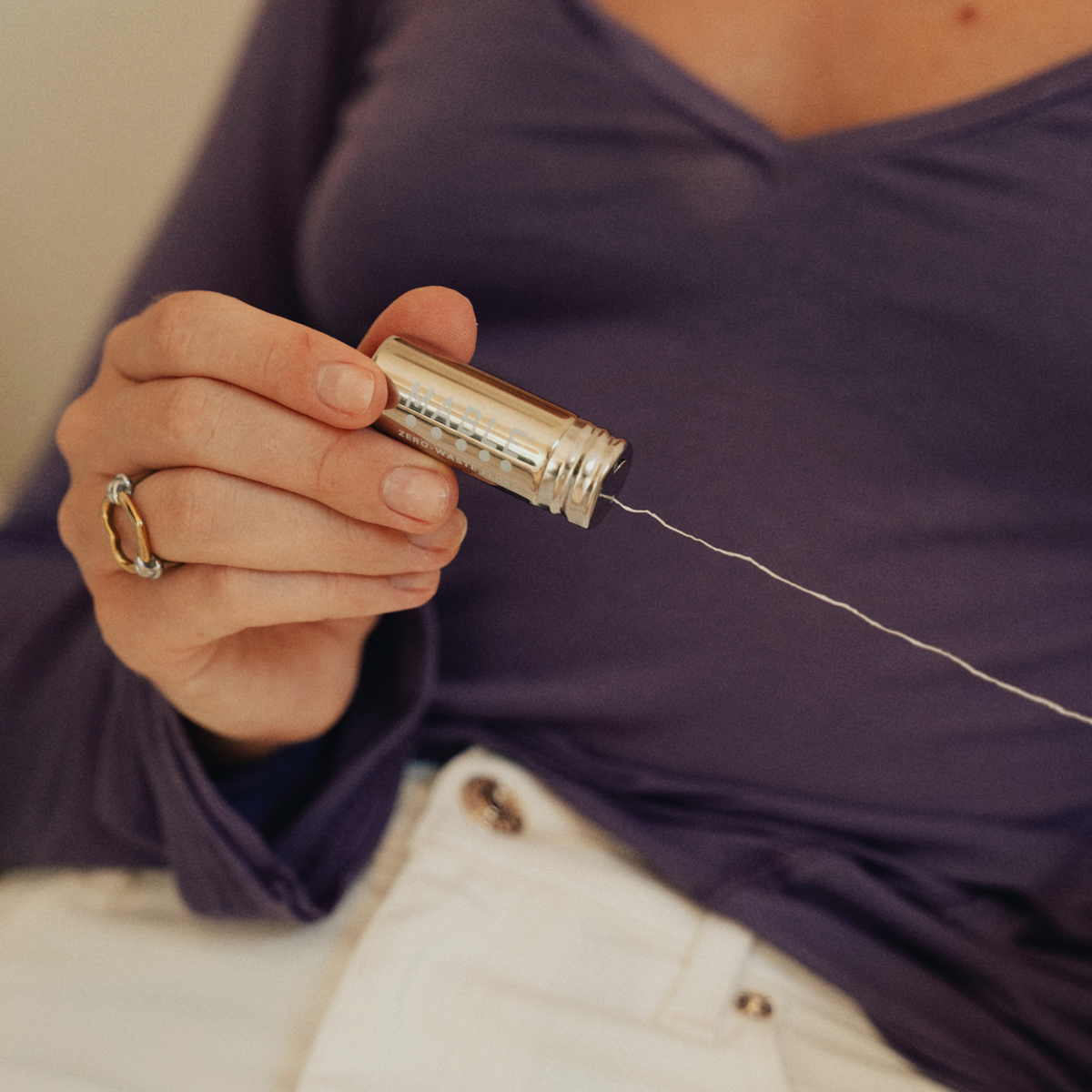
Smaller, mission-driven brands are leading the charge in sustainability. MABLE, for instance, focuses on sustainable, naturally sourced oral care products, including bamboo toothbrushes, bamboo replacement heads for electric toothbrushes, and refillable floss containers. By choosing renewable materials and designing products that last, MABLE provides eco-friendly alternatives to disposable plastics and encourages mindful consumption habits.
Limitations of Clothing Recycling Programs
Not Everything Is Accepted
Most programs exclude:
-
Socks
-
Underwear
-
Heavily worn/damaged items
-
Low-quality synthetics

Services like TerraCycle, SuperCircle, specialized in mail-in textile recycling, also accept textiles that are difficult to recycle conventionally, such as socks, underwear, or heavily blended fabrics. Prioritizing responsible recycling reduces landfill contributions, closes material loops, and strengthens the circular fashion ecosystem.but availability varies.
Corporate Greenwashing
Many large brands use take-back bins as marketing tools rather than true sustainability efforts. Outsized production volumes dwarf their recycling capacity. Without transparency and reporting, consumers should remain cautious.
Technology Is Still Limited
Fiber separation, chemical recycling, and blended-fabric processing are in early stages. The industry simply cannot recycle textiles at the scale consumers expect.
Overproduction the Core Problem
Recycling cannot compensate for the massive volume of fast-fashion output. Reducing consumption remains the most meaningful solution.
Consumer Guide: How to Recycle Clothes Responsibly
Responsible textile recycling involves more than simply tossing old garments into a donation bin it’s about ensuring materials are processed in a way that truly keeps them in circulation. Textiles made from single fibers, such as cotton, wool, or linen, can often be mechanically recycled or composted if uncolored and untreated. Synthetic fabrics like polyester may require specialized chemical recycling programs. Many municipalities now offer textile drop-off sites
1. Repair First
-
Local tailors
-
Visible mending
-
Brand repair programs like Patagonia Worn Wear
2. Donate Thoughtfully
-
Local shelters, nonprofits, or church drives
-
Avoid anonymous donation bins
3. Use Take-Back and Mail-in Programs
4. Find Municipal Textile Recycling
Many cities now offer textile drop-off sites. Check local government waste-management pages.
5. Sell or Swap
-
Online: Depop, Poshmark, ThredUp, Facebook Marketplace.
-
Local: Clothing swaps, community exchanges.
6. Repurpose at Home
Old clothes and shoes don’t have to end up in landfills they can be creatively repurposed at home or in your community. T-shirts, cotton tops, and denim scraps can be turned into cleaning rags, reusable shopping bags, quilts, cushion covers, or tote bags. Shoes with worn soles can become planters, DIY garden tools, or art projects, while athletic sneakers can be repurposed for non-slip surfaces in workshops or play areas.
You can also donate footwear to organizations like Soles4Souls, which redistributes shoes to those in need or recycles them into functional products such as playground surfaces. Repurposing extends product life, reduces landfill waste, and offers a practical way to practice sustainability daily.
Upcycling ideas include:
-
Rags and cleaning cloths
-
Quilts or patchwork
-
Reusable bags
-
Pet bedding
-
Composting natural fibers (cotton, wool, linen)
Sustainable Alternatives to Fast-Fashion Waste
Long-term change begins with mindful consumption:
-
Choose durable, high-quality products
-
Support brands committed to circularity
-
Buy secondhand
-
Avoid short-lived trends
-
Prioritize repairability

At MABLE, our philosophy focuses on mindful consumption: choosing long-lasting and eco-friendly essentials that provide a sustainable alternative to plastic oral care products, designed to replace disposable habits with natural, thoughtfully crafted solutions.
A More Responsible Path Forward
Understanding the truth of old clothing whether resold, exported, downcycled, or landfilled empowers consumers to make informed choices. Donation alone is not enough; true sustainability requires reducing consumption, extending garment life, supporting transparent brands, and advocating for circular systems.
Every small action counts. Collectively, they shift the fashion industry toward a future where clothing is valued, waste is minimized, and the lifecycle of every garment is respected.


Share:
Eco-Friendly Electronics Disposal: What to Do With Old or Broken Electronics Sustainably
How to Create a Sustainable Bathroom Sanctuary